
Caveat meaning in short: a caveat is an admonition or a caveat is a term added to a statement. It advises people not to believe all of it but to remember one thing. The term is derived from the Latin phrase “let him beware. Caveat is also a formal notice requesting a court to “halt” an action in legal terminology.
It is audible at meetings. You’ll find it in contracts. You hear it in the news: “Yes, but with one proviso.” So once you do see this at work, the meaning of the caveat is quite straightforward. The use, the law, the source and the real uses you can copy from are all covered in this guide.
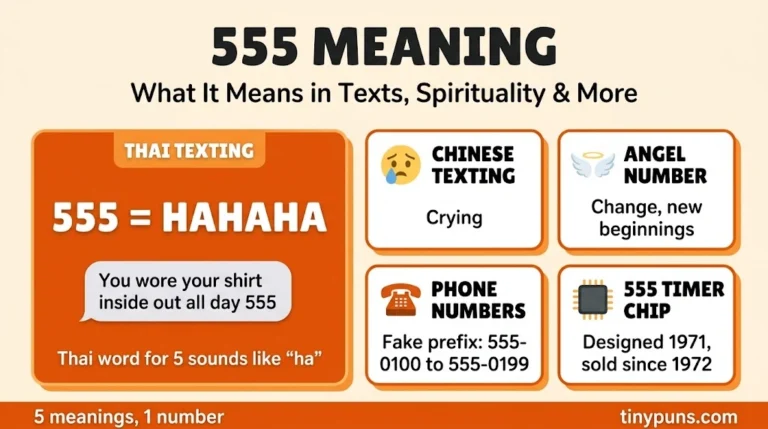
Find word explainers with a short, succinct answer? Let’s begin our guide to 555 meaning. Then visit the niche meaning slang page to find more slang terms. Texting a lot? Find NGL meaning. Planning an event? Find out the meaning of the word RSVP.
What Does Caveat Mean?
Caveat comes from the Latin word and is a noun. It has two main meanings.
A warning or limit. A point you need to keep in mind when evaluating, reading, or acting on something.
A legal notice. It requests a court or registry to hold off until the individual who filed it can speak.
The plural form of the word caveat is caveats. The word “caveat” frequently gets used in the phrases “add a caveat,” “with one caveat” or “a big caveat.”
Imagine a yellow sign on the road that you have to watch out for. It states, “Be careful, the bridge is too narrow.” It is still possible to cross the line. Simply know the danger first.
Caveat Meaning in Everyday Life
Most use caveat in its first meaning. It displays when a user likes an idea but desires to establish a limit.
At work: “I’ll just give it my approval with one condition, it has to ship by Friday.”
A small battery, the phone is awesome, in shopping.
In the news: “The study looks promising, but there’s an expert’s caveat: “The sample is very small.”
Friends: “I’ll be there at the party, just one thing, I leave at 10.”
Caveat does not cancel your point. It sizes the point to a correct size. For this reason, careful writers love it.
[TABLE: Caveat in a Sentence]
Caveat Meaning in Law
A caveat is a formal notice in law. It conveys to a court or an official registry that they should refrain from taking a step until a person who filed it has received notice and had a chance to be heard. The person is known as caveator.
There are two typical examples of this:
Caveat: A person raises a caveat against a will in order to have their objections heard before the will is allowed to be approved by the court.
Petitioner may file a caveat in India under Section 148A of the Civil Procedure Code. It prevents a court from issuing an order in a case without the person being heard.
There are country-specific and court-specific rules. If you must make one, consult a local lawyer.
Where Does the Word Caveat Come From?
Caveat is a purely Latin term. It translates as “let him beware” and is from the verb cavēre, “to beware” or “take care”. According to Merriam-Webster, the first record of its use in English is from 1557. So this word has warned people for almost 500 years.
The first people to bring it into English were the lawyers and traders. Later on, common speakers appropriated it. Nowadays, a student can use it in a school talk and nobody will flinch.
Caveat Emptor: The Famous Cousin
It may be familiar to you from the expression caveat emptor. It translates to “let the buyer beware.” Buyer should inspect goods/property before payment. In the event the product is found to be defective, the purchaser may be held responsible.
The following is an example: “No warranty on the used car, the engine was checked twice, caveat emptor.”
Note the difference. One constraint is a caveat. The rule of the whole buying is caveat emptor.
How to Use Caveat in a Sentence
Caveat is most useful when used in conjunction with the limitting claim. Put it following the good news or proceeding the big promise. Keep it short.
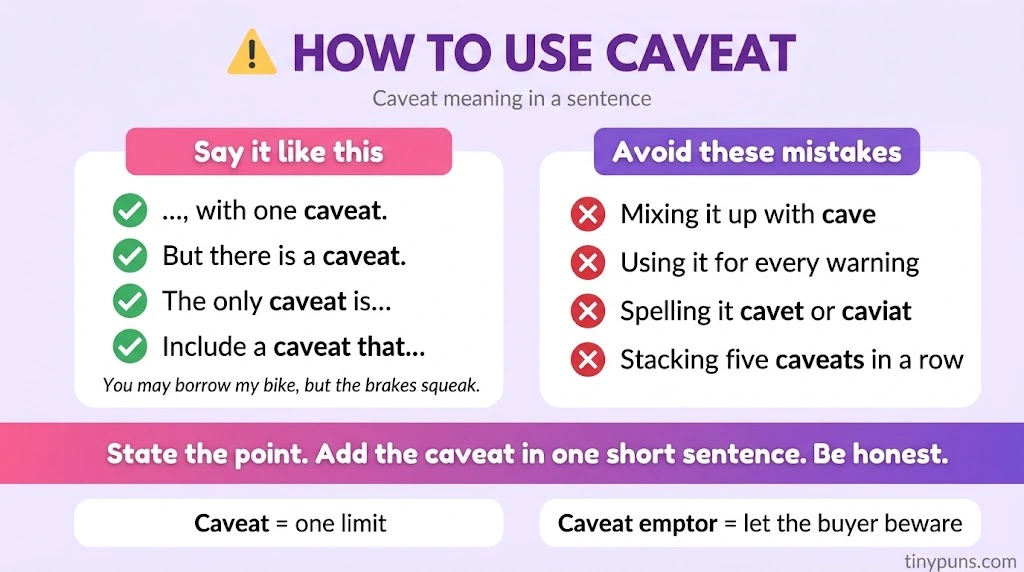
Good patterns include:
“…, with one caveat.”
“But there is a caveat,” he says.
“The downside of that is…”
“Include a proviso that…”
Try these:
You may borrow my bike, except for the fact that the brakes squeak.
The recipe is simple, here is the catch, two hours are required for the dough to rise.
“On balance, I trust her work, but with the proviso that she’s a new player.”
Caveat vs. Similar Words
Similar Words: The following words are similar in some way to caveat.
Caveat is near other words. They are not the same.
[TABLE: Caveat vs. Similar Words]
Caution: Caveat is similar in meaning to the words listed to the left.
Common Mistakes With Caveat
Lots of errors with caveat
Playing it safe with “cave.” Nowhere in the word is there reference to caves. The sound is the word KAV-ee-at.
Utilization thereof for any warning. A caveat restricts a claim. A simple danger sign does not always indicate a caveat.
The rule of “emptor” and buyer, anyway. If you really mean the phrase, “buyer beware,” then say it!
Misspelling it. The right spelling is caveat. Not ‘cavet’ nor ‘caviat’.
How to Add a Caveat Without Sounding Sneaky
Caution helps to create trust. A bad one conceals the actual message. Follow these steps:
State the point at the beginning.
In one short sentence, add the caveat.
Be honest about the amount of the limit.
Avoid 5 consecutive caveats. Many have too many sounds that sound like fear.
Others state that a caveat is merely covering one’s bases. That can be the case at times. If it’s honest and succinct, it has the opposite effect. Gives you a neat and honest appearance.
Caveat Jokes and Wordplay
A warning to the reader: jokes and word play are on the horizon.
This is tinyPuns, after all, so we had to. Here are three original ones:
To explore a cave is my passion and so was my guide, but with one condition: no hugging the bats.
Why did the bat scan an article in the fine print? Each cave conveys a caveat.
According to my lawyer, the offer is absolute dream come true, except for one thing. The whole thing was the caveat.
Need the complete dictionary definition and additional sentences? Merriam-Webster has a page where you can be reassured about the term caveat.
FAQ
The word “caveat” in simple terms means?
A warning or condition; a proviso. It advises you to keep something in mind before believing a statement.
What does caveat mean in law?
A formal notice given to a court or registry. It urges them to delay actions until they have an opportunity to hear from the filer.
What does “with one caveat” mean?
It implies that there is something else to take into account or a restriction to be considered.
What is the meaning of the difference between caveat and caveat emptor?
This is a single caution or restriction, a “caveat. The Latin motto cautionary of the buyer is ‘caveat emptor’.
How do you pronounce caveat?
Say KAV-ee-at. The first part is like the ‘have’ word but with a K.
Conclusion
The caveat meaning reduces to one concept: a caveat to keep a big claim honest. For normal conversation it brings a restriction. In law, it’s used to keep a door open until someone speaks. You should place it close to your main topic, limit its length, and your words will be clear and fair.